Baking sheets warp primarily due to rapid temperature changes, a phenomenon known as thermal shock. This sudden stress on the metal causes it to expand or contract unevenly, leading to the characteristic bending or popping sound often heard in the oven. A warped baking sheet results in uneven cooking, with some parts of your food burning while others remain undercooked. It also creates an unstable surface, increasing the risk of spills in your oven.
Understanding Thermal Shock: The Primary Cause of Warping
Thermal shock occurs when a baking sheet experiences a drastic temperature shift in a short period. Imagine placing a cold sheet directly into a very hot oven, or, more commonly, taking a hot sheet straight from the oven and plunging it into cold water or rinsing it under a cold tap. The rapid change stresses the metal, causing different areas to expand and contract at varying rates. This uneven movement is what forces the sheet to buckle.
Most baking sheets are made from aluminum or steel, metals that are excellent conductors of heat. This conductivity, while beneficial for baking, also makes them susceptible to rapid temperature changes. Thinner gauge sheets, typically 20-gauge or higher, are particularly vulnerable because they have less material to absorb and distribute the thermal stress.
Preventing Thermal Shock
The simplest way to prevent thermal shock is to introduce your baking sheet to temperature changes gradually. Always preheat your oven with the baking sheet inside, allowing it to come up to temperature slowly with the oven. After baking, remove the sheet from the oven and let it cool on a wire rack at room temperature. Resist the urge to cool it down quickly with cold water, even if you are in a hurry to clean up. Allowing it to cool naturally prevents the sudden contraction that leads to warping.
Material Quality and Thickness: A Factor in Durability
The thickness, or gauge, of your baking sheet plays a significant role in its resistance to warping. Lower gauge numbers indicate thicker metal. For example, an 18-gauge aluminum sheet is thicker and more robust than a 22-gauge sheet. Thicker materials are less prone to warping because they can better withstand thermal stress. They have more mass to absorb and dissipate heat evenly, reducing the likelihood of sudden, localized expansion or contraction.
Choosing Quality Bakeware
When purchasing new baking sheets, look for those made from heavy-gauge aluminum or aluminized steel. These materials offer superior heat distribution and durability. A good quality rimmed baking sheet, often found in the $20 to $60 range, will typically be 16 or 18 gauge. While these might cost more upfront, their longevity and consistent performance make them a worthwhile investment. They can significantly reduce the chances of encountering warping issues. For more specific recommendations, consider reviewing our article on Best Baking Sheets: Rimmed Sheet Pans That Bake Evenly and Last.
Uneven Heating and Overloading
Sometimes, warping can occur due to uneven heating within the oven itself, or if the baking sheet is overloaded. Ovens often have hotspots, areas where the temperature is higher than others. If a thin baking sheet is exposed to an intense hotspot without adequate air circulation, it can warp. Similarly, overloading a baking sheet with too much food can create uneven heat distribution, as some parts are insulated while others are directly exposed to the heat.
Addressing Uneven Heating
To mitigate this, rotate your baking sheet halfway through the cooking process. This practice helps to ensure even exposure to heat across the entire surface. Also, avoid overcrowding the sheet. Give your food enough space for air to circulate, which promotes uniform cooking and reduces stress on the metal. If you need to bake a large quantity, use multiple baking sheets instead of trying to fit everything onto one.
Improper Storage Practices
While less common than thermal shock, improper storage can contribute to a baking sheet's deformation over time. Stacking heavy items on top of a thin baking sheet, or storing it in a way that causes it to bend or flex, can gradually compromise its structure. Repeated pressure or bending can weaken the metal, making it more susceptible to warping even under normal cooking conditions.
Best Storage Methods
Store baking sheets flat whenever possible, or vertically in a bakeware organizer. This protects them from accidental bending and distributes weight evenly, preventing undue stress. Ensuring your bakeware is stored correctly helps maintain its original shape and extends its lifespan.
Attempting to Un-Warp a Baking Sheet
The unfortunate reality is that once a baking sheet has significantly warped, it is very difficult, if not impossible, to restore it to its original flat condition. The metal has undergone stress and structural changes, often leading to what is known as metal fatigue. Trying to bend it back into shape usually results in further unevenness or, in some cases, cracking the metal, especially if it is coated with a nonstick layer.
Why DIY Fixes Rarely Work
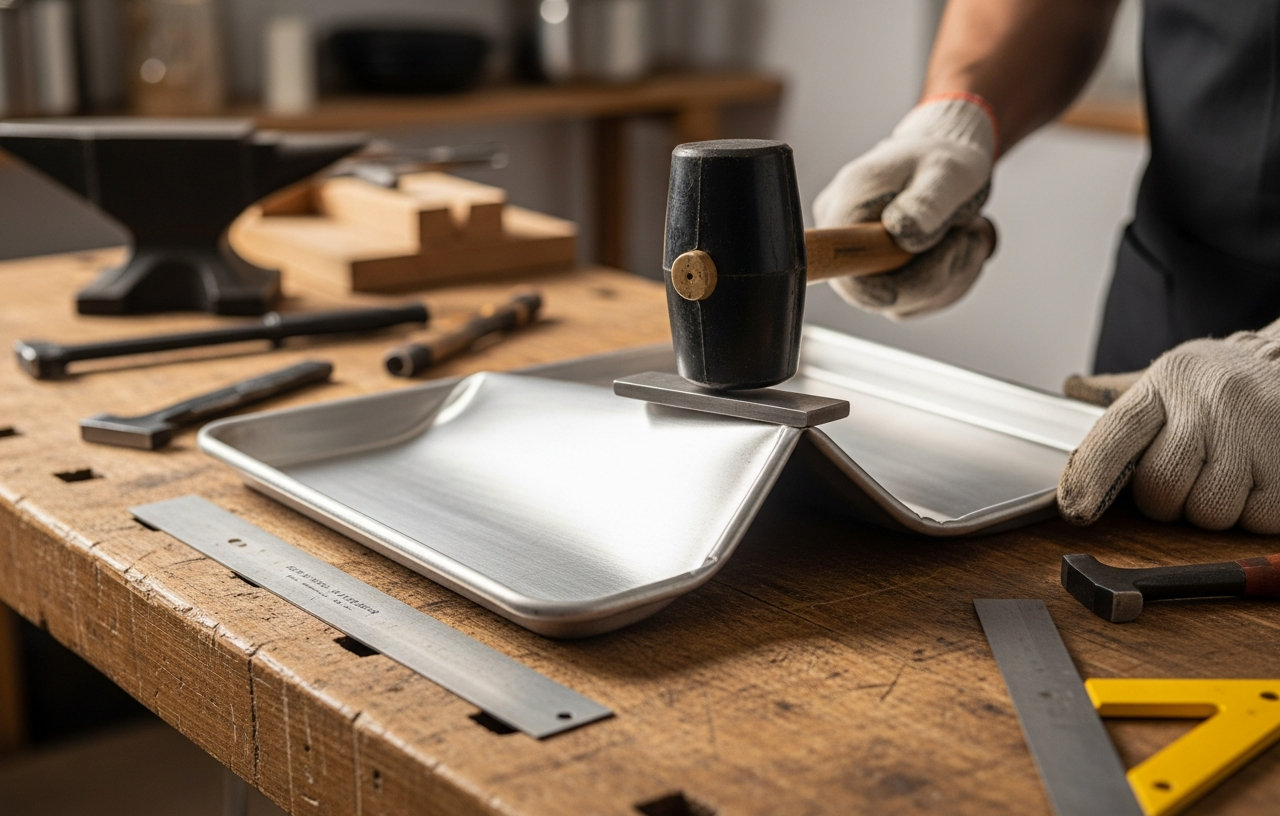
Some people attempt to un-warp a sheet by bending it back by hand or using a rubber mallet. For very minor, almost imperceptible bows, this might offer a temporary, partial correction. However, for a pronounced warp, these methods are largely ineffective. Applying force unevenly can create new stress points or simply shift the warp to another area. The metal's memory, combined with its altered crystalline structure, resists attempts to return to its perfectly flat state.
Professional repair for a warped baking sheet is not a practical or cost effective solution. Metal fabrication shops might theoretically be able to flatten a sheet using specialized equipment, but the cost would far exceed that of purchasing a new, high quality baking sheet. A new, durable baking sheet typically costs between $20 and $60, making replacement the most sensible option.
When to Replace Your Baking Sheet
You should replace your baking sheet if the warping is severe, causing significant uneven cooking or making it difficult to balance. Deep scratches, dents, or damage to any nonstick coating are also clear indicators for replacement. A compromised nonstick surface can release flakes into your food and lose its nonstick properties, making cleanup difficult.
Consider the age and overall condition of your bakeware. Even without severe warping, older sheets that show signs of wear, discoloration, or rust spots may no longer perform optimally. Investing in new bakeware ensures consistent results and safer cooking. When choosing replacements, prioritize heavier gauge materials and proper care to prevent future warping.
Prevention is Key for Long-Lasting Bakeware
The best approach to dealing with a warped baking sheet is prevention. By understanding the causes of warping and implementing simple care practices, you can significantly extend the life of your bakeware. Always allow hot baking sheets to cool gradually at room temperature before washing. Avoid extreme temperature changes, choose heavier gauge baking sheets when purchasing new ones, and store them flat or vertically to prevent bending. These habits will help keep your baking sheets flat and performing well for many years of delicious meals and baked goods.