Cost Breakdown by Cookware Material
The price for a new set of pots and pans ranges from less than $100 for a starter kit to well over $2,000 for a professional-grade collection. The difference in price comes down to three main factors: the material used, the construction method, and the number of pieces in the set. Understanding these elements is key to finding a set that matches your budget and cooking style.
Material dictates not only price but also cooking performance, durability, and maintenance requirements. A thin aluminum nonstick pan behaves very differently from a heavy, 5-ply stainless steel skillet. Below is a detailed breakdown of what you can expect to pay for sets made from the most common cookware materials.
Nonstick Cookware Sets: $50 - $400
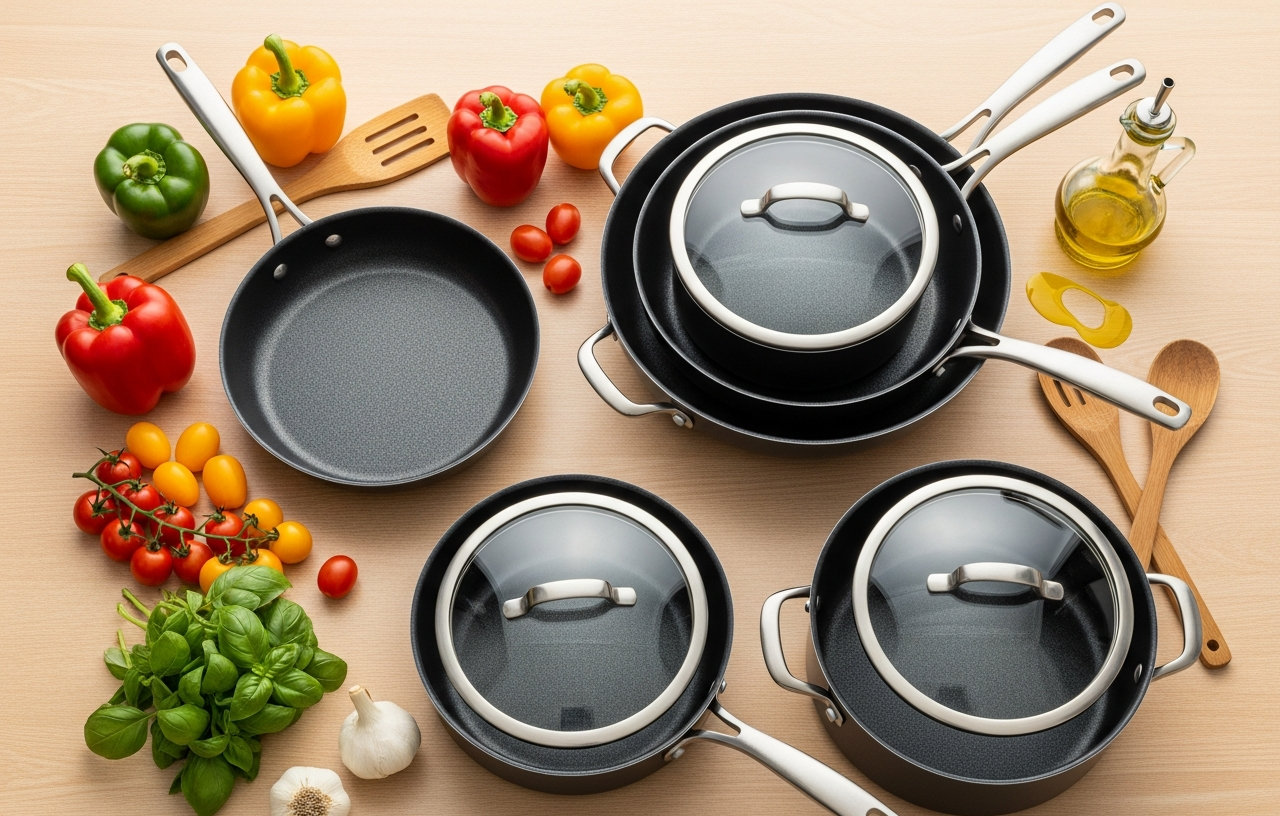
Nonstick cookware is often the entry point for new cooks, college students, or anyone prioritizing convenience and easy cleanup. These sets are typically built on an aluminum base, which heats up quickly, and then coated with a nonstick surface.
At the lower end of the spectrum, from $50 to $150, you will find basic sets with a PTFE (often generically called Teflon) coating. These are lightweight and effective for cooking delicate foods like eggs and fish without sticking. Their primary drawback is durability. The coatings can scratch easily, and high heat can cause them to degrade. Expect a lifespan of one to three years with regular use.
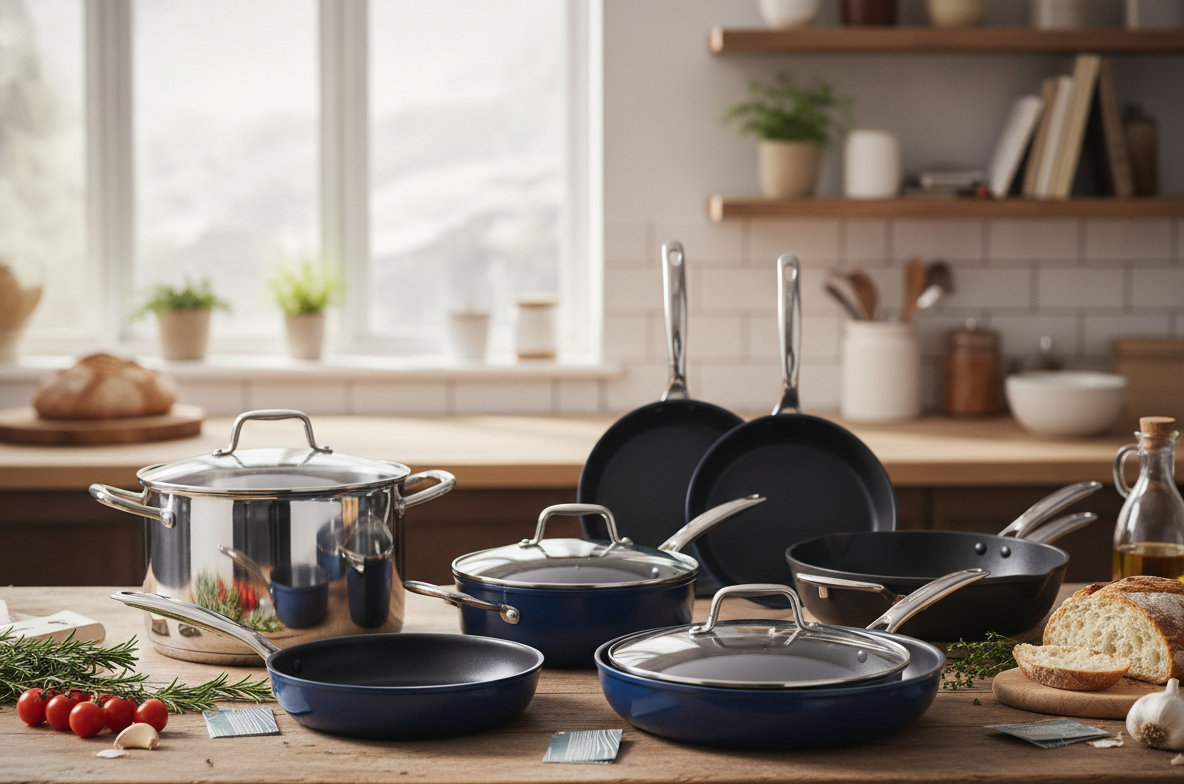
Moving into the $150 to $400 range, you'll find higher-quality nonstick options. This includes sets made with hard-anodized aluminum, which is more durable and scratch-resistant than standard aluminum. The nonstick coatings in this tier are also more robust, often reinforced with ceramic or other materials for longer life. Some sets in this price bracket may also feature stainless steel handles and glass lids, offering a more premium feel and better oven safety.
Stainless Steel Cookware Sets: $150 - $1,500+
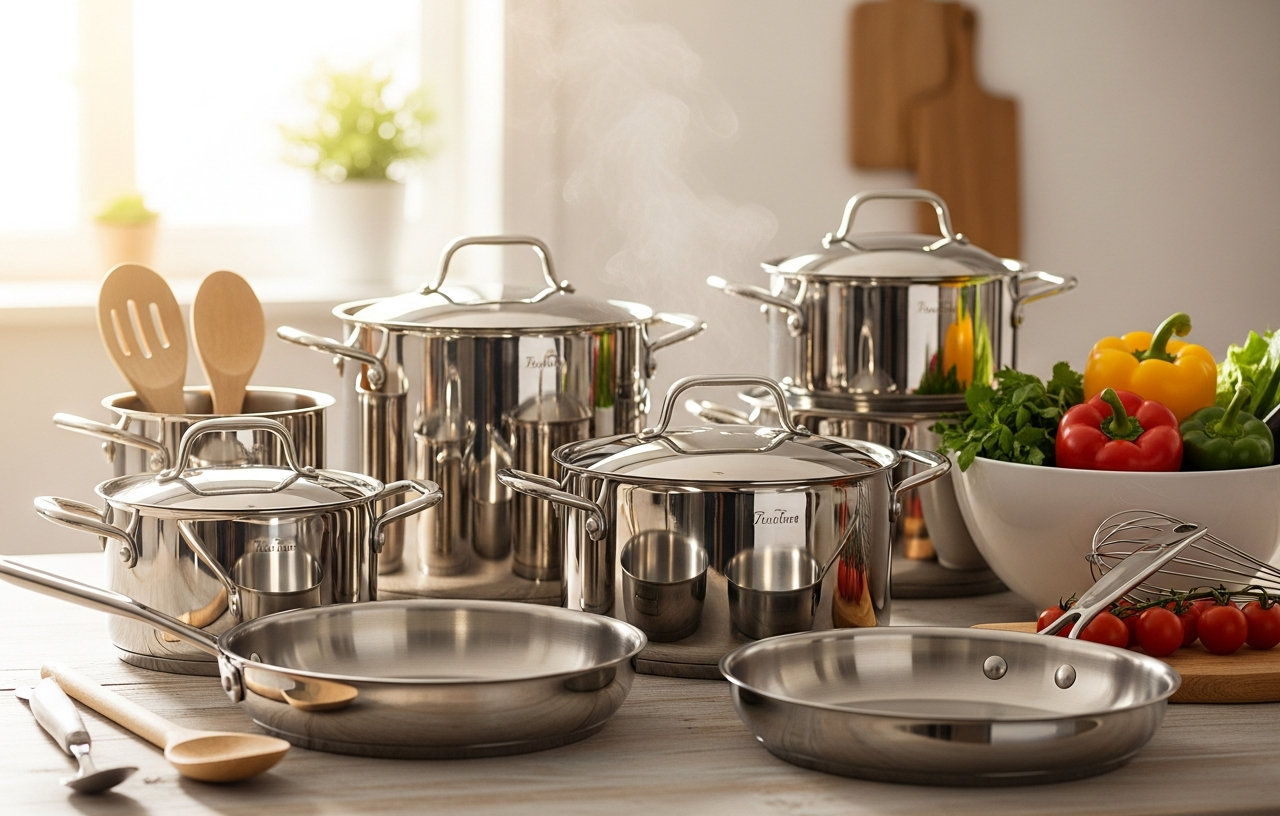
Stainless steel is the workhorse of many home and professional kitchens. It is durable, non-reactive (it won't impart a metallic taste to acidic foods like tomato sauce), and can handle high heat for perfect sears. The price variation in stainless steel is immense and is almost entirely dependent on its construction.
Entry-level stainless steel sets, costing between $150 and $300, typically feature an encapsulated base. This means a disc of aluminum or copper is bonded to the bottom of a stainless steel pan. This construction improves heat distribution, but only on the bottom surface. The pan's sidewalls remain thin steel, leading to less even cooking for tasks like simmering sauces.
The best value and performance come from fully-clad multi-ply sets, which range from $350 to $800. In these pans, layers of conductive material like aluminum or copper extend all the way up the sides. This 3-ply or 5-ply construction creates exceptionally even heating and precise temperature control. This is the sweet spot for most serious home cooks.
At the premium end, from $800 to $1,500 or more, are sets from legacy brands. These feature thicker layers of steel, superior cladding with copper cores, and are often manufactured in the USA or Western Europe. The performance gains are incremental over the mid-range sets, but you are paying for impeccable craftsmanship, brand reputation, and lifetime warranties.
For a detailed comparison of these two popular materials, see our guide: Stainless Steel vs Nonstick Cookware: Which Is Better?
Cast Iron Cookware: $75 - $500 (for a collection)
Cast iron is rarely sold in large, comprehensive sets like stainless steel. Instead, home cooks typically build a collection piece by piece. Cast iron is prized for its superior heat retention, making it ideal for searing steaks, frying chicken, and baking cornbread. It is incredibly durable and can last for generations.
A basic, pre-seasoned 12-inch cast iron skillet can be purchased for as little as $20 to $40. An enameled cast iron Dutch oven, a versatile pot for braises, stews, and bread baking, will cost between $60 and $150 for a quality budget-friendly model. high end enameled Dutch ovens from brands like Le Creuset or Staub can cost $300 to $500 for a single pot.
Assembling a functional 3-piece "set" consisting of a large skillet, a Dutch oven, and a griddle pan would cost approximately $150 to $250 with standard brands. Opting for premium enameled pieces would push that total closer to $700 or more.
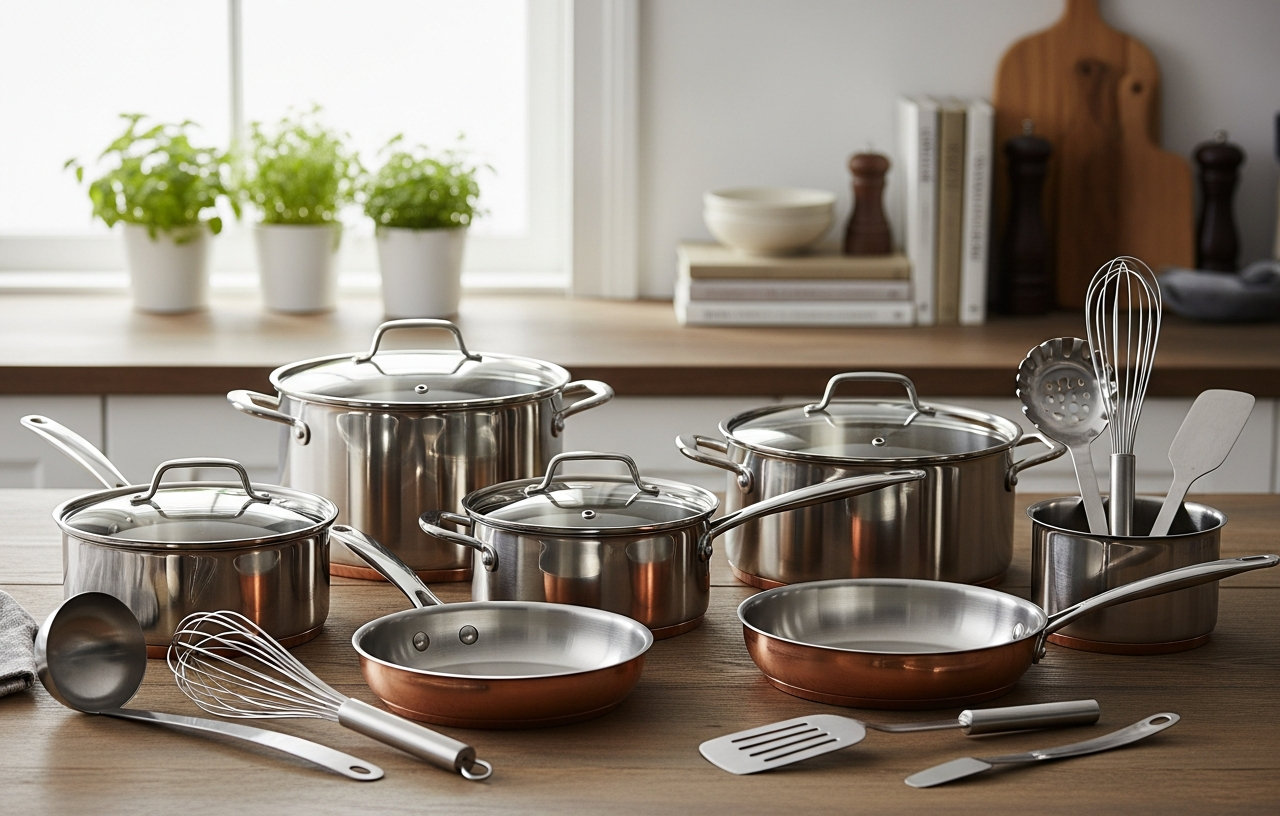
Copper Cookware Sets: $800 - $2,500+
Copper cookware sits at the apex of price and performance. Its thermal conductivity is far superior to that of aluminum or cast iron, offering near-instantaneous response to temperature changes. This is why it is favored by professional pastry chefs and sauce makers.
However, this performance comes at a very high cost. A small, 7-piece set of copper cookware typically starts around $800. A more comprehensive 10 or 12-piece set from a respected manufacturer can easily exceed $2,000. Copper also requires significant maintenance, including regular polishing, to maintain its appearance and performance. It is a luxury item for dedicated cooking enthusiasts.
What Are You Paying For? Deconstructing the Price Tag
Beyond the primary material, several other factors influence the final cost of a cookware set. Understanding these details helps you evaluate whether a higher price tag translates to better value for your needs.
Construction: Cladding and Core Materials
As discussed with stainless steel, the construction method is a major cost driver. The term "ply" refers to the number of bonded layers of metal. A 3-ply construction (stainless steel, aluminum, stainless steel) is a common standard for good performance. A 5-ply construction may add more layers of aluminum or a layer of copper to enhance heat distribution even further, increasing the price accordingly. Cheaper pans use a simple disc bonded to the bottom, while more expensive pans are fully clad up the sides. This full cladding is what provides the even heating that prevents scorching and allows for delicate simmering.
Piece Count vs. Piece Quality
A common marketing tactic is to advertise a large piece count. Often, these sets include multiple small, less useful pans (like a 1-quart saucepan) and count nylon utensils and even the lids as separate pieces to inflate the number. A 17-piece set might only contain 8 actual pots and pans.
Conversely, a 7-piece set for $450 might include a 12-inch skillet, a 10-inch skillet, a 3-quart saucepan, and a 6-quart stockpot. These are the core pieces used in most kitchens. You are paying more per piece, but for higher-quality, more versatile cookware that you will use constantly. Always check the specific items included, not just the final piece count.
Brand Reputation and Warranty
Established brands with a long history of quality command higher prices. This is partly due to their reputation, but also because they often back their products with extensive or lifetime warranties. A lifetime warranty on a $900 cookware set provides a guarantee against manufacturing defects, which can be a valuable consideration for a long term investment. Lesser-known or budget brands may offer only a one or two-year limited warranty.
Specialty and high end Cookware Costs
Some cookware types fall outside the standard categories and carry unique price points due to their materials or sales models.
How much does a set of Saladmaster cookware cost?
Saladmaster is a brand known for its very high prices and direct-to-consumer sales model, which involves in-home demonstrations. A set of Saladmaster cookware can cost anywhere from $2,000 to over $5,000. The company justifies this cost by highlighting its use of 316Ti stainless steel, which incorporates titanium for added corrosion resistance. While the material is high quality, the price is significantly influenced by the company's multi-level marketing structure. Potential buyers should compare the product's features against other premium stainless steel brands available through traditional retail channels.
Hybrid Cookware (HexClad, etc.): $400 - $1,000
Hybrid cookware combines the searing ability of stainless steel with the convenience of nonstick. It achieves this with a laser-etched stainless steel pattern that sits above a nonstick coating. This design aims to protect the nonstick surface from metal utensils while providing better browning.
These sets are priced in the premium category. A 7-piece set from a popular hybrid brand costs around $400 to $700. A larger 13-piece set can approach $1,000. This price reflects the complex manufacturing process required to create the hybrid surface. You can learn more in our HexClad Review.
Building Your Own Set vs. Buying Boxed: A Cost Analysis
Buying a boxed set is convenient and almost always cheaper on a per-piece basis. However, you often end up with pans you rarely use. Building your own set a la carte allows you to get exactly what you need and invest in quality where it matters most.
Let's compare two scenarios for a home cook who needs the basics.
- Scenario 1: Boxed Set. A 10-piece mid-range stainless steel set costs around $250. It includes an 8-inch skillet, 10-inch skillet, 1.5-quart saucepan, 3-quart saucepan, and a 6-quart stockpot, all with lids. The quality is consistent across all pieces.
- Scenario 2: Building a Custom Set. You buy the pieces you use most from different brands, prioritizing quality.
- A high quality 12-inch fully-clad stainless steel skillet: $100
- A durable 3-quart nonstick saucepan for soups and grains: $60
- An enameled cast iron 5-quart Dutch oven for stocks and braises: $70
The total for the custom set is $230. For slightly less money, you have acquired three high-performing, specialized pieces that perfectly match your cooking habits, rather than a collection of uniform but potentially less ideal pans. For many, this is a smarter way to build a kitchen arsenal.
When Does It Make Sense to Spend More?
The right amount to spend depends entirely on your cooking habits, budget, and long term goals.
Spend less ($50 - $200) if you are a beginner, cook infrequently, or need a temporary set for a dorm or first apartment. A basic nonstick set will serve its purpose without a large financial commitment.
Spend in the mid-range ($250 - $600) for the best long term value. This is the ideal price point for most dedicated home cooks. A fully-clad stainless steel set or a high end hard-anodized nonstick set in this range will provide excellent performance and last for many years, possibly decades.
Spend more ($700+) if cooking is a serious passion. At this level, you are investing in heirloom-quality pieces with superior materials like copper cores or French-made enameled cast iron.