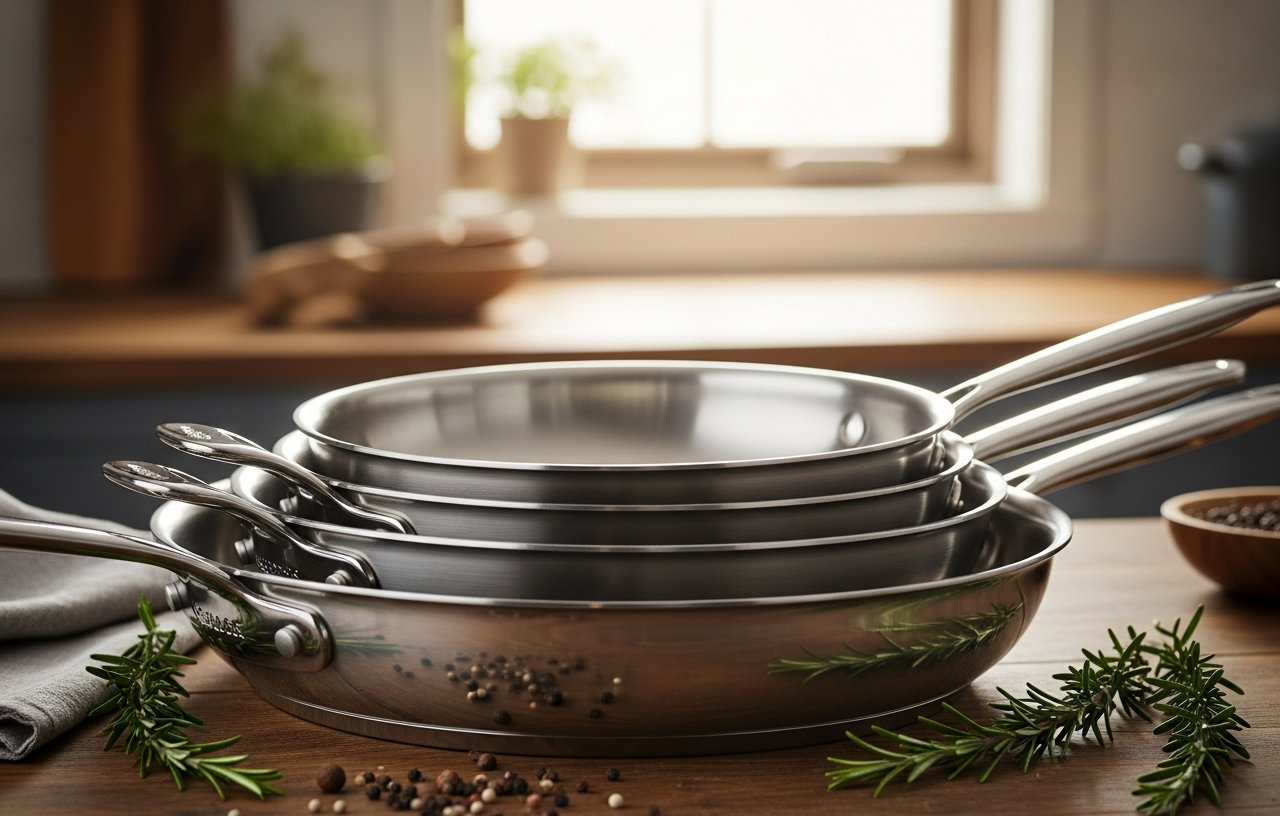
A high quality stainless steel skillet is a foundational piece of cookware in any kitchen, valued for its ability to achieve a perfect sear and its enduring durability. Unlike nonstick pans, stainless steel withstands high temperatures without degradation, making it ideal for browning meats and creating rich pan sauces. The Misen 5-Ply Stainless Steel 12" Frying Pan stands out as the best stainless steel skillet on the market. Its robust 5-ply construction, generous cooking surface, and high oven-safe temperature make it an exceptional choice for home cooks who prioritize performance and longevity.
Many home cooks seek the best stainless steel frying pan to elevate their cooking. The key to a good stainless steel pan lies in its construction, specifically how many layers of metal are used and their composition. These layers directly impact heat distribution, responsiveness, and overall resilience. While nonstick coatings offer convenience, they often sacrifice durability and the ability to achieve a crisp sear. Stainless steel provides a naturally non-reactive surface and the versatility to go from stovetop to oven, handling temperatures that would ruin most nonstick options. This makes it a good stainless steel frying pan choice for a wide range of culinary tasks.
Misen 5-Ply Stainless Steel 12" Frying Pan (Top Pick)
The Misen 5-Ply Stainless Steel 12" Frying Pan earns our top recommendation as the best stainless steel skillet for serious home cooks. Its professional-grade construction features five layers: an aluminum core sandwiched between three layers of durable stainless steel. This 3.0mm thick design ensures exceptional heat distribution across the entire cooking surface, eliminating hot spots and allowing for consistent browning and searing. When heat distributes evenly, your food cooks uniformly, from the edges of a pan-fried chicken breast to the center of a delicate omelet.
One of Misen's most significant advantages is its impressive durability and resistance to warping. Based on manufacturer data, this pan is oven safe up to 800°F. This high heat tolerance means you can confidently transfer dishes from the stovetop to a very hot oven for finishing, or even use it under a broiler without concern. The robust build is designed to withstand the rigors of daily cooking, maintaining its flat base over years of use. This is a critical factor for consistent cooking, especially on flat-top electric or induction cooktops.
The Misen skillet also offers a generous cooking surface. According to product specifications, it provides 20% more usable space compared to many other 12-inch frying pans. This extra room is invaluable when cooking for a family or preparing multiple components of a meal simultaneously. More cooking surface means less crowding, which is essential for proper searing. Crowding a pan lowers the temperature and steams food instead of browning it, so the larger surface area directly contributes to better cooking results.
Pros:
- Superior Heat Distribution:
- Exceptional Durability: Built to last, it resists warping even under high heat and heavy use.
- High Oven Safety: Safe up to 800°F, offering maximum versatility for stovetop-to-oven cooking.
- Generous Cooking Surface: 20% more usable space for larger batches and better searing.
Cons:
- Heavier Weight: The robust 5-ply construction can make the pan feel heavier than thinner, tri-ply alternatives. This might be a consideration for some users.
Best For:
This Misen skillet is best for experienced home cooks and culinary enthusiasts who demand professional-level performance from their cookware. It suits those who frequently cook for larger families, enjoy searing meats to perfection, or often transition dishes from stovetop to oven. If you are looking for the absolute best stainless steel skillet that will perform consistently for decades, this is the one to choose. It is an investment in durable, high-performance cookware.

- 5-Ply, 3.0mm Thick Stainless Steel - Engineered with 3 layers of durable stainless steel and 2 aluminum.
- Built to Last, Resists Warping - Oven safe up to 800°F and designed to never warp. This pan can handle.
- Generous Cooking Surface - Our skillets features a larger-than-average cooking surface,20% more space than.
- Easy to Clean & Dishwasher Safe - The sealed edges and smooth surface make cleanup a breeze. Throw it in.
Titanium Frying Pan with Lid, 26cm Professional Stainless Steel Skillet
For home cooks seeking a stainless steel pan with enhanced stick resistance without relying on traditional chemical coatings, the Titanium Frying Pan with Lid offers an innovative solution. This professional stainless steel skillet features a unique honeycomb surface layered with durable titanium. The design incorporates SS430 and SS304 stainless steel, providing a robust base. The raised honeycomb pattern is designed to reduce direct food contact with the pan's surface, creating tiny air pockets and allowing oil to spread more effectively. This helps minimize sticking, making it an excellent option for those transitioning from nonstick cookware but wanting the benefits of stainless steel.
The 26cm (approximately 10.2-inch) size of this pan makes it a versatile option for everyday cooking tasks, from frying eggs to sautéing vegetables. A notable feature is its detachable stainless steel handle. This design provides significant convenience for storage, as the pan can fit into smaller cabinets or drawers when the handle is removed. It also simplifies cleaning, especially if you prefer to hand wash, and makes the pan more compact for oven use. The inclusion of a lid is another practical advantage, allowing for simmering, steaming, and retaining heat, which can be useful for various recipes.
This is not a true nonstick coating in the way PTFE-based pans are. Instead, it provides a physical barrier that helps food release more easily than a completely smooth stainless steel surface. Proper preheating and the use of cooking oil are still necessary for optimal results, as with any stainless steel pan. This pan represents a thoughtful blend of traditional stainless steel durability with a design element aimed at improving food release.
Pros:
- Honeycomb Surface: The unique titanium-layered honeycomb pattern helps reduce food sticking, a benefit for those accustomed to nonstick.
- Detachable Handle: Enhances storage convenience and simplifies cleaning, also makes it more versatile for oven use.
- Includes Lid: Adds value and functionality for simmering, steaming, and heat retention.
Cons:
- Relative Nonstick Performance: While improved, it is not a traditional nonstick surface, so some sticking can still occur without proper cooking techniques.
- Smaller Size: At 26cm, it is slightly smaller than the 12-inch Misen skillet, which might be a limitation for larger meals.
Best For:
This titanium frying pan is ideal for home cooks who are seeking a good stainless steel frying pan but are hesitant about the learning curve of traditional stainless steel. It caters to those who appreciate the durability and non-reactivity of stainless steel but desire a slight edge in food release. The detachable handle and included lid also make it a strong choice for cooks with limited storage space or those who frequently use a lid during cooking. It's particularly well-suited for smaller households or individuals.

- Crafted with a durable titanium surface layered with SS430 and SS304 stainless steel, this frying pan.
- The raised honeycomb pattern reduces direct food contact, helping minimize sticking while allowing oil to.
- Designed with a detachable stainless steel handle for convenient storage and cleaning. Comes with a.
- Ideal for frying, sautéing, searing, and stir-frying. The 26cm diameter offers ample space for daily meals.
SAKAMOSH 12" Tri-Ply Stainless Steel Frying Pan
The SAKAMOSH 12" Tri-Ply Stainless Steel Frying Pan offers a robust and reliable option for everyday cooking. Its tri-ply clad construction, a common design for quality stainless steel pans, features an aluminum core sandwiched between two layers of stainless steel. This design ensures good heat distribution, preventing many of the hot spots that can occur in single-ply pans. An aluminum core is an excellent conductor of heat, allowing the pan to heat up quickly and maintain a consistent temperature across its surface. This makes it a dependable choice for general frying, sautéing, and searing tasks.
This SAKAMOSH skillet boasts universal compatibility, meaning it works effectively on all cooktops, including induction, gas, and electric. This versatility makes it a suitable choice for almost any kitchen setup. It is also oven safe up to 500°F, providing flexibility for recipes that require both stovetop searing and oven finishing. While not as high as the Misen, a 500°F oven limit is sufficient for most home cooking applications, allowing you to finish frittatas, brown oven-baked chicken, or keep dishes warm.
The cooking surface is made from 304 stainless steel, which is known for being healthy and non-toxic. It is PFOA-free and PTFE-free, ensuring that no harmful chemicals leach into your food. This non-reactive surface is safe for cooking with acidic ingredients like tomatoes or wine, without imparting metallic flavors.
Pros:
- Tri-Ply Construction: Provides good, even heat distribution for consistent cooking results.
- Universal Compatibility: Works on all cooktops, including induction, making it highly versatile.
- Healthy & Non-Toxic: PFOA/PTFE-free 304 stainless steel interior is non-reactive and safe.
Cons:
- Lower Oven-Safe Temperature: Its 500°F oven limit is lower than some premium 5-ply options, which might be a minor limitation for very high-heat oven finishes.
Best For:
The SAKAMOSH 12" Tri-Ply Stainless Steel Frying Pan is an excellent choice for everyday home cooks looking for a reliable, all-around good stainless steel frying pan. It suits those who need a versatile pan that works on any stovetop and can go into the oven for most standard recipes. If you are upgrading from basic nonstick or single-ply pans and want a dependable, non-toxic option for a wide range of cooking tasks, this skillet offers solid performance and value.

- Tri-Ply Clad Construction for Even Heating: Professional-grade tri‑ply construction with an aluminum core.
- Universal Compatibility & Oven Safe: Works on all cooktops including induction. Oven safe up to a.
- Healthy & Non-Toxic Cooking Surface: PFOA‑free and PTFE‑free 304 stainless steel interior does not react.
- Energy Efficient & Dishwasher Safe Design: The multi-layer clad construction heats quickly and retains.
Why Choose Stainless Steel Skillets?
Stainless steel skillets offer a distinct set of advantages that make them a preferred choice for many home cooks. Unlike nonstick pans, which are often limited by temperature restrictions and delicate coatings, stainless steel can withstand extremely high heat. This capability is essential for achieving a perfect sear on meats and vegetables, creating that desirable crispy crust and rich, flavorful browning. The surface of stainless steel allows for the formation of fond, the caramelized bits of food that stick to the bottom of the pan. This fond is the foundation for delicious pan sauces, which can be easily deglazed by adding liquid to the hot pan.
Durability is another hallmark of stainless steel. These pans are built to last, resisting scratches, dents, and warping far better than most other cookware materials. They are non-reactive, meaning they will not leach metallic flavors into acidic foods like tomato sauces or lemon-based dishes. This makes them a safe and versatile option for almost any type of cuisine. The aesthetic appeal of gleaming stainless steel also complements modern kitchen designs.
For a deeper understanding of how stainless steel compares to other materials, you can read our Stainless Steel vs Nonstick Cookware: Which Is Better? guide. This resource explains the trade-offs and benefits of each material.
Understanding Stainless Steel Construction: Tri-Ply vs. 5-Ply
The performance of a stainless steel skillet is largely determined by its construction. The terms "tri-ply" and "5-ply" refer to the number of layers of different metals fused together to create the pan's body. These layers are engineered to combine the strengths of various metals, typically stainless steel for durability and non-reactivity, and aluminum or copper for superior heat conduction.
Tri-Ply Construction
Tri-ply, or three-ply, construction is a common and highly effective design for quality stainless steel pans. It typically consists of an aluminum core sandwiched between two layers of stainless steel. The outer stainless steel layer provides a durable, induction-compatible surface, while the inner layer offers a non-reactive cooking surface. The aluminum core is the workhorse for heat. Aluminum is an excellent conductor, meaning it heats up quickly and distributes that heat evenly across the pan's surface. This prevents hot spots that can burn food and ensures consistent cooking. Tri-ply pans offer a good balance of performance, durability, and weight, making them a popular choice for everyday cooking.
5-Ply Construction
Five-ply construction takes heat distribution and durability a step further. These pans feature multiple layers, often alternating between stainless steel and aluminum. For example, a common 5-ply design might involve an inner stainless steel cooking surface, followed by layers of aluminum, another stainless steel, then more aluminum, and finally an outer stainless steel layer. The increased number of conductive layers, especially aluminum, results in even more precise and rapid heat distribution. This means the pan responds faster to changes in stove temperature and maintains a more uniform heat across the entire cooking surface, which is critical for delicate sauces or searing at high, consistent temperatures. 5-ply pans are generally thicker and heavier than tri-ply options, reflecting their enhanced performance and robust build. They are often considered professional-grade cookware due to their superior heat management and resistance to warping.
Key Features to Consider When Buying a Stainless Steel Skillet
When selecting the best stainless steel skillet, several features contribute to its overall utility and cooking experience. Considering these aspects will help you choose a pan that best fits your cooking style and needs.
Handle Design and Material
The handle of a stainless steel skillet is more than just a grip. Look for handles that are securely riveted to the pan, rather than welded, for maximum durability. Riveted handles are less likely to loosen or break over time. The material of the handle also matters. Stainless steel handles are ideal because they can go directly into the oven without melting or degrading, unlike plastic or silicone-coated handles. A hollow or ergonomically designed handle can help disperse heat, keeping the handle cooler to the touch during stovetop cooking, though oven mitts are always advisable when transferring from heat.
Lid Compatibility
While many skillets are sold without a lid, having a compatible lid significantly expands the pan's versatility. A lid allows you to simmer, braise, steam, and keep food warm. It also helps contain splatters. Some skillets come with a lid, as seen with the Titanium Frying Pan option, while others might require a separate purchase. If you frequently cook dishes that require covering, make sure to factor this into your decision. A clear glass lid can be particularly useful for monitoring cooking progress without lifting the lid and releasing heat.
Oven Safety
Most quality stainless steel pans are oven safe to at least 350°F to 500°F. Premium options, like the Misen, can withstand temperatures up to 800°F. A higher oven-safe limit provides greater flexibility, allowing you to sear a steak on the stovetop and then transfer it to a hot oven to finish cooking to your desired doneness, or to bake dishes like frittatas or cornbread directly in the pan. Always verify the manufacturer's specified oven-safe temperature, especially if the pan has a non-stainless steel handle or other components.
Cooking Surface Size and Shape
The diameter of the pan, typically measured across the top rim, gives a general idea of its size. However, the usable flat cooking surface area is often more important. Some 12-inch pans have steeply sloped sides, reducing the actual flat cooking space, while others, like the Misen, feature straighter sides that maximize the usable surface. A larger flat cooking surface is beneficial for searing multiple items without overcrowding, which is key for achieving proper browning. Consider the types of meals you prepare most often. A 10-inch pan is suitable for one or two servings, while a 12-inch or larger pan is better for families or batch cooking.
Mastering Stainless Steel Cooking: Tips for Best Results
Cooking with stainless steel requires a slightly different approach than nonstick, but once you understand the principles, it offers superior results. The key to successful stainless steel cooking, and avoiding sticking, lies in proper heat management and oil usage.
Preheating is Essential
Always preheat your stainless steel skillet before adding oil or food. Place the empty pan over medium heat for 2-3 minutes. A good test for readiness is the water droplet test: flick a few drops of water into the hot pan. If the water sizzles and evaporates immediately, the pan is not hot enough. If the water forms small, mercury-like beads that dance across the surface, the pan is perfectly preheated. This phenomenon is known as the Leidenfrost effect. If the water splatters aggressively and evaporates, the pan is too hot. Remove it from the heat for a moment, then reduce the heat before continuing.
Use the Right Amount of Oil
Once the pan is properly preheated, add your cooking oil. Use enough oil to coat the entire cooking surface, but not so much that it's swimming in oil. Swirl the oil around to cover the bottom of the pan. The oil should shimmer, indicating it's hot enough. Avoid overheating the oil to the point of smoking. The oil fills the microscopic pores in the stainless steel, creating a barrier that prevents food from directly contacting the metal and sticking.
Don't Crowd the Pan
Overcrowding a stainless steel pan is a common mistake that leads to steaming instead of searing. When too much food is added, it lowers the pan's temperature dramatically, causing moisture to release and preventing proper browning. Cook in batches if necessary, allowing enough space for each piece of food to make direct contact with the hot surface. This ensures that a beautiful, flavorful crust develops.
Let Food Release Naturally
When searing meats or vegetables, resist the urge to constantly move the food. Allow it to cook undisturbed for a few minutes. As the food browns, it will naturally form a crust and release itself from the pan. Trying to force it off too soon will result in tearing and sticking. A gentle nudge with a spatula will indicate when it's ready to flip. This natural release is a clear sign that you are achieving a good sear.
Cleaning and Care for Your Stainless Steel Skillet
Proper cleaning and care will keep your stainless steel skillet performing well for years. Stainless steel is generally forgiving, but a few practices can help maintain its appearance and functionality.
Dishwasher Safety
Most high quality stainless steel skillets are dishwasher safe, including all three reviewed here. While convenient, hand washing is often recommended for best results and to prevent potential discoloration from harsh dishwasher detergents. If using a dishwasher, make sure to use a non-abrasive detergent.
Deglazing for Easy Cleanup
After cooking, especially when searing, you will likely have fond stuck to the bottom of the pan. This is not burnt food, but flavorful caramelized bits. To clean, remove the food, then immediately add a splash of liquid (water, broth, or wine) to the hot pan. Use a wooden spoon or spatula to scrape up the fond. This process, called deglazing, not only creates a delicious pan sauce but also makes cleanup much easier by loosening any stuck-on bits.
Removing Stuck-On Food and Stains
For stubborn stuck-on food, fill the pan with hot water and a few drops of dish soap, then let it soak for 15-30 minutes. Gently scrub with a non-abrasive sponge or brush. For more persistent stains, especially blue or rainbow discoloration from overheating, a paste made of baking soda and water or a specialized stainless steel cleaner can be effective. Apply the paste, let it sit for a few minutes, then scrub gently and rinse. Avoid steel wool or abrasive scouring pads, as these can scratch the surface.
A stainless steel skillet is a versatile and durable addition to any kitchen, capable of achieving cooking results that other types of pans often cannot match. By understanding its construction, mastering proper cooking techniques, and following simple care guidelines, you can enjoy years of exceptional cooking performance. Whether you choose the robust Misen 5-ply, the innovative Titanium honeycomb, or the dependable SAKAMOSH tri-ply, a good stainless steel pan will serve you well.