Enameled cast iron cookware, like Dutch ovens and skillets, brings both beauty and functionality to a kitchen. Its smooth, non-reactive glass coating prevents rust and makes it easier to clean than raw cast iron. However, this enamel surface requires specific care to maintain its integrity, prevent staining, and prolong its lifespan. Aggressive cleaning methods or harsh tools can scratch the enamel, compromising its performance and appearance.
Understanding the right way to clean enameled cast iron protects your investment. Whether you are dealing with everyday food residue or tackling a burnt-on mess, gentle and consistent cleaning practices are key. This guide outlines the proper techniques for keeping your enameled cast iron in excellent condition, ensuring it continues to perform well for years of cooking.
Why Enameled Cast Iron Needs Special Care
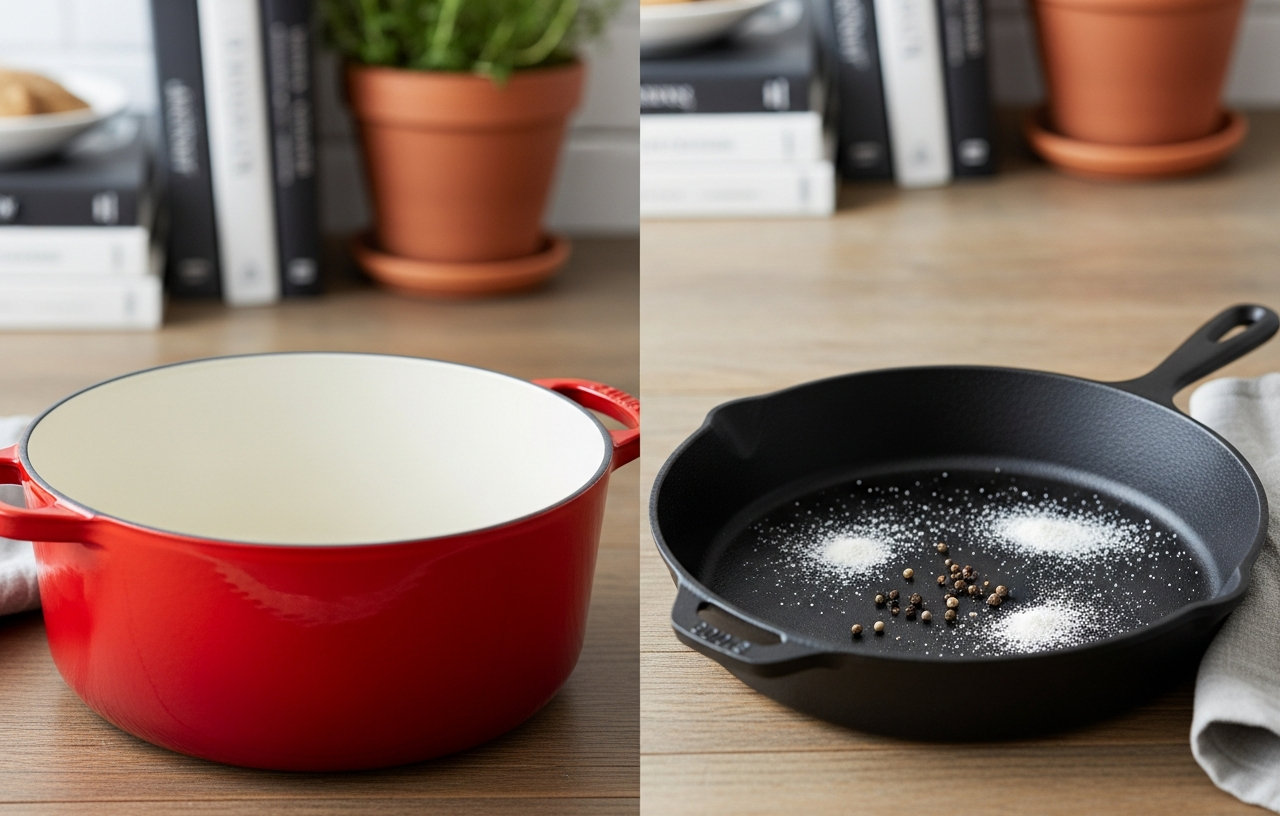
Enameled cast iron differs significantly from traditional, raw cast iron. Raw cast iron requires seasoning, a baked-on layer of oil that creates a nonstick surface and prevents rust. Enameled cast iron, by contrast, has a vitreous enamel coating. This glass-like layer is non-reactive, meaning you can cook acidic foods without concern, and it does not require seasoning. The enamel also provides a naturally smooth, somewhat nonstick surface.
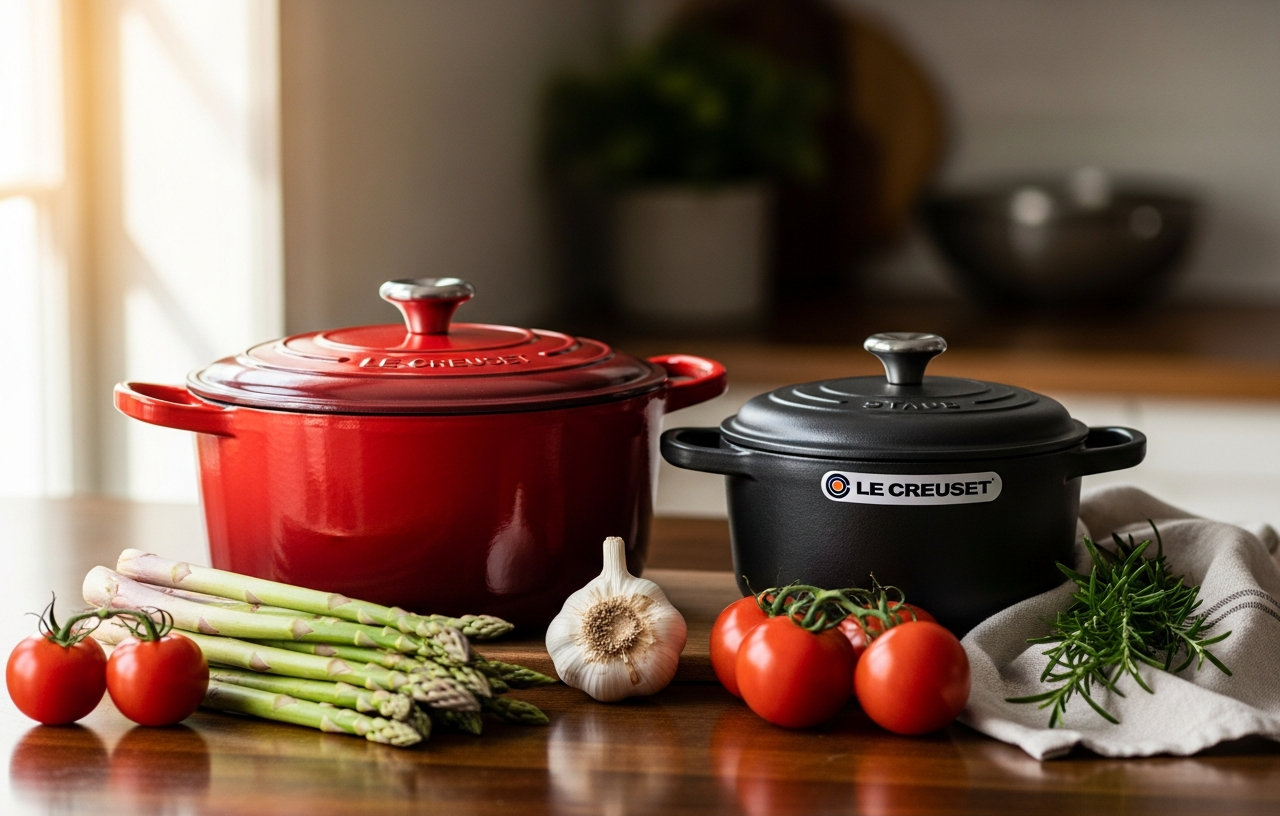
While durable, the enamel is not indestructible. It can chip, crack, or stain if subjected to extreme temperature changes (thermal shock), abrasive scrubbers, or harsh chemicals. Chips and cracks expose the raw cast iron underneath, which can then rust. Stains, while often cosmetic, can be unsightly and indicate improper cleaning methods. Proper care ensures the enamel remains intact, preventing damage that could shorten the life of your cookware. This special care extends to how you clean a Le Creuset, a popular brand known for its enameled cast iron Dutch ovens.
Essential Tools and Materials
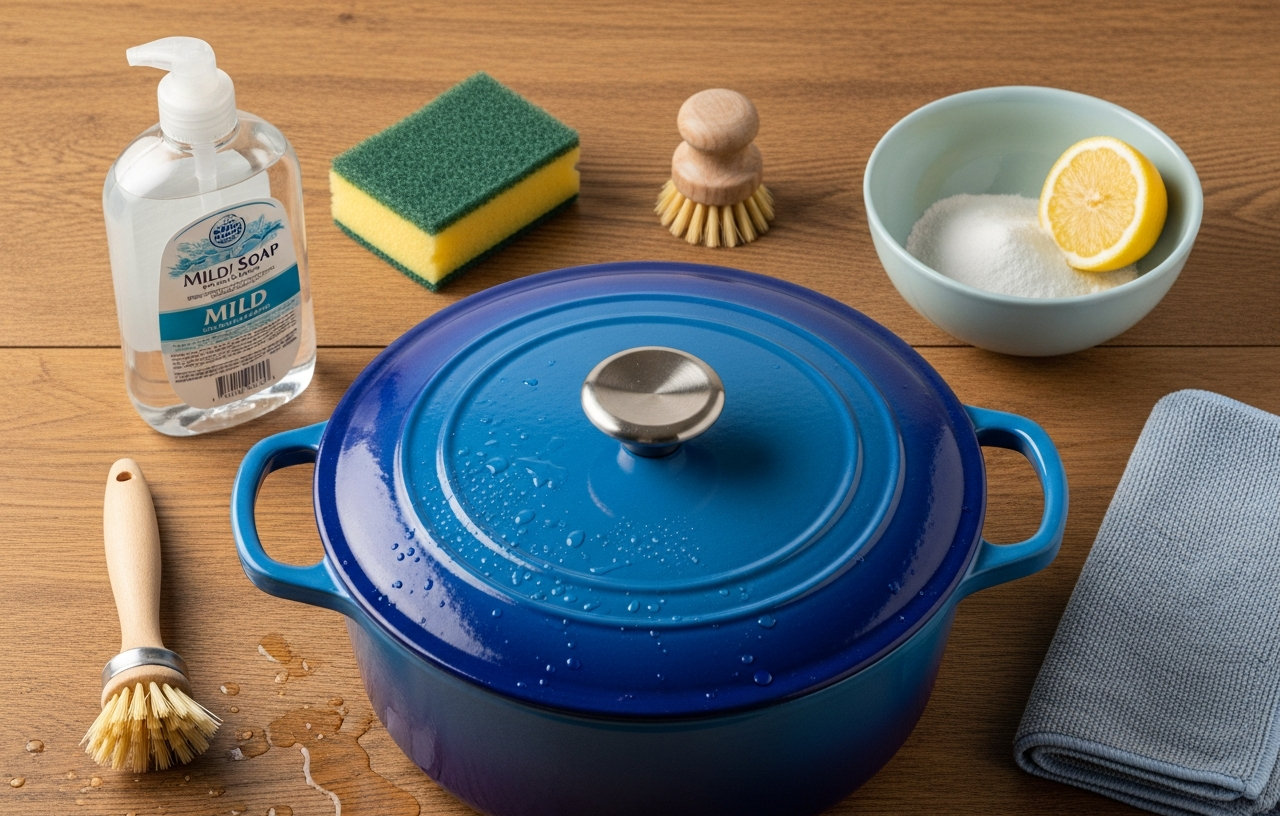
Cleaning enameled cast iron does not require specialized equipment, but having the right tools on hand makes the process easier and safer for your cookware. Most items are common household staples.
- Warm water: Essential for loosening food and rinsing.
- Mild dish soap: Cuts grease without damaging the enamel.
- Soft sponge or cloth: Nylon or cellulose sponges are ideal.
- Nylon scraper or silicone spatula: For gently removing stuck-on food without scratching.
- Baking soda: A mild abrasive and deodorizer, effective for stubborn residue and stains.
- Specialized cleaner (optional): For deep cleaning and removing tough stains.
- Soft towel: For thorough drying.
Having these materials ready will help you effectively clean a cast iron Dutch oven or any other enameled piece. The total time for a basic cleaning usually takes 5-10 minutes. For more stubborn messes, expect 30-60 minutes, including soaking time.
step by step Guide to Cleaning Enameled Cast Iron
Follow these steps to clean your enameled cast iron cookware effectively, from everyday washing to tackling burnt-on messes and discoloration.
Step 1: Cool Down and Scrape (1-2 minutes)
Always let your enameled cast iron cookware cool completely before washing it. Submerging a hot pan in cold water can cause thermal shock, which may lead to the enamel cracking or chipping. Once cool, use a nylon scraper or a wooden/silicone spatula to gently scrape away any loose food particles. Do not use metal utensils, as they can scratch the enamel surface. This initial scraping helps reduce the effort needed for washing.
Step 2: Wash with Soap and Water (5-10 minutes)
Fill the cooled pan with warm water and add a few drops of mild dish soap. Use a soft sponge or cloth to wipe down the interior and exterior of the pan. The soap helps to break down grease and food residue. Pay attention to the rim, handles, and any crevices where food might accumulate. Rinse thoroughly with warm water until all soap residue is gone. For most everyday messes, this step is sufficient to clean enameled cast iron.
Step 3: Tackle Stubborn Food Residue (10-30 minutes)
If food remains stuck after a basic wash, do not reach for abrasive scrubbers. Instead, try these methods:
- Soak: Fill the pan with warm water and a tablespoon of dish soap. Let it soak for 15-20 minutes, or even overnight for very stubborn messes. The prolonged soaking helps to loosen the food. After soaking, try scrubbing gently with a soft sponge again.
- Boil and Scrape: For truly burnt-on food, fill the pan with about an inch of water and bring it to a simmer on the stovetop. Add a tablespoon or two of baking soda. Let it simmer for 5-10 minutes, then turn off the heat and let it cool. The baking soda and hot water will work to loosen the burnt bits. Once cool, use your nylon scraper or wooden spoon to gently dislodge the residue. Empty the pan and wash as usual. This method is particularly effective for how to clean a cast iron Dutch oven with tough residue.
Step 4: Remove Stains and Discoloration (10-60 minutes)
Over time, enameled cast iron, especially lighter-colored interiors, can develop stains or discoloration from cooking certain foods. These are usually cosmetic and do not affect performance, but they can be removed.
- Baking Soda Paste: Make a paste with baking soda and a small amount of water. Apply the paste to the stained areas and let it sit for 15-30 minutes. Gently scrub with a soft sponge, then rinse thoroughly. This method is gentle and often effective for mild discoloration.
- Specialized Cleaners: For more persistent stains, a specialized cleaner designed for cookware can be very effective.
Bar Keepers Friend Superior Cookware Cleanser & Polish is a popular choice for removing stains, tarnish, rust, and lime from stainless steel and enameled surfaces. This cleanser works by using oxalic acid, which gently lifts discoloration without harsh abrasives. To use, wet the surface, sprinkle a small amount of the powder onto the stain, and rub gently with a damp sponge or cloth. Rinse thoroughly and dry. It is a powerful degreaser that works well for restoring the shine to your pots and pans.

- Bar Keepers Friend Cookware Cleanser & Polish is a stainless steel cleaner and degreaser for pots, pans.
- Remove stains, tarnish, rust & lime
- BKF products clean without bleach- better for stainless steel
- Clean cookware, kitchen & bathroom surfaces


Le Creuset Enameled Cast Iron Cookware Cleaner is specifically formulated for Le Creuset products, but it can be used on other enameled cast iron as well. This liquid cleaner is designed to remove food residue, stains, and discoloration from the enamel surface. To use, simply apply a small amount of the cleaner to a damp cloth, rub it onto the stained area, then rinse with water and wipe clean. It comes in an 8.45 fluid ounce bottle and is made in France. This cleaner is a reliable option for how to clean a Le Creuset or any similar enameled cast iron piece, ensuring the longevity of your cookware.

- Bottle Size: 8. 45 fluid ounces (250ml)
- Made in France
- Simply apply cleaner, rinse with water, and wipe clean
- Works on both sand-interior and matte black interior


Step 5: Dry Thoroughly (1-2 minutes)
After cleaning and rinsing, immediately dry your enameled cast iron cookware with a soft, clean towel. This prevents water spots and, more importantly, prevents rust from forming on any exposed cast iron, such as the rim of a Dutch oven or the edges of the handles where the enamel might be thinner or absent. Even though the enamel protects most of the surface, any exposed raw cast iron can rust.
Step 6: Store Properly
Once completely dry, store your enameled cast iron in a cabinet or on a pot rack. If stacking, place a cloth or paper towel between pieces to prevent scratches to the enamel surface. Proper storage helps maintain the cookware's condition and prevents accidental damage.
What to Avoid When Cleaning Enameled Cast Iron
Knowing what not to do is just as important as knowing what to do when cleaning enameled cast iron. Avoiding these common mistakes will help preserve your cookware:
- Abrasive Cleaners and Scouring Pads: Steel wool, metal scouring pads, and harsh abrasive powders can scratch and dull the enamel surface. Stick to soft sponges, nylon scrubbers, or specialized enamel cleaners.
- Metal Utensils: Never use metal spatulas or scrapers on the enamel, as they can leave permanent scratches. Use wooden, silicone, or nylon tools for cooking and cleaning.
- Dishwashers: While some manufacturers claim their enameled cast iron is dishwasher safe, handwashing is always recommended. Dishwasher detergents can be harsh, and the high heat cycles can dull the enamel's sheen over time, potentially leading to chipping.
- Sudden Temperature Changes (Thermal Shock): Never put a hot pan under cold water, or a cold pan directly onto high heat. This can cause the enamel to crack or craze. Always allow the pan to cool naturally before washing.
- Bleach-Based Cleaners: Bleach can discolor the enamel and is generally too harsh for cookware. Stick to mild dish soap or specialized cleaners.
For more information on the differences between enameled and raw cast iron, you can read our guide: Enameled vs. Raw Cast Iron: Choosing the Right Cookware.
Preventing Future Stains and Damage
Proactive measures can significantly reduce the need for intensive cleaning and help maintain your enameled cast iron's condition. Here are some tips:
- Use Medium Heat: Enameled cast iron retains and distributes heat very well. You rarely need to use high heat, which can scorch food and lead to stubborn burnt-on residue.
- Use Enough Oil or Liquid: Always use a sufficient amount of cooking oil, butter, or liquid when cooking to prevent food from sticking and burning to the enamel surface.
- Avoid Overfilling: Do not overfill your Dutch oven or pot. This prevents boil-overs that can bake onto the exterior, creating hard-to-clean messes.
- Clean After Every Use: Wash your enameled cast iron promptly after it cools down. Fresh food residue is much easier to remove than dried or baked-on food.
- Consider Color: Lighter enamel interiors, while beautiful, show stains more readily. Darker interiors, like those found in some Le Creuset or Staub models, can hide minor discoloration better.
Following these guidelines will help you keep your enameled cast iron cookware looking and performing its best, whether you are cleaning a Le Creuset Dutch oven or any other brand.