A basic 5-piece kitchen utensil set can cost as little as $15, while a comprehensive 20-piece premium collection might reach $150 or more. The price of a kitchen utensil set varies significantly based on several factors, including the number of pieces, the materials used, and the brand's reputation for quality.
For home cooks, deciding between a budget-friendly starter set and a high end collection involves weighing immediate needs against long term durability and performance. This guide breaks down the typical costs associated with various kitchen utensil sets, helping you understand where your money goes.
Understanding Kitchen Utensil Set Price Tiers
Kitchen utensil sets fall into distinct price tiers, each offering different levels of quality, durability, and functionality. These tiers help categorize what you can expect for your investment.
Budget-Friendly Utensil Sets: Under $40
For new homeowners, students, or those outfitting a secondary kitchen, sets in the $15 to $40 range are common. These sets typically include 5 to 10 essential pieces. Materials are often basic nylon, silicone with plastic handles, or lightweight stainless steel.
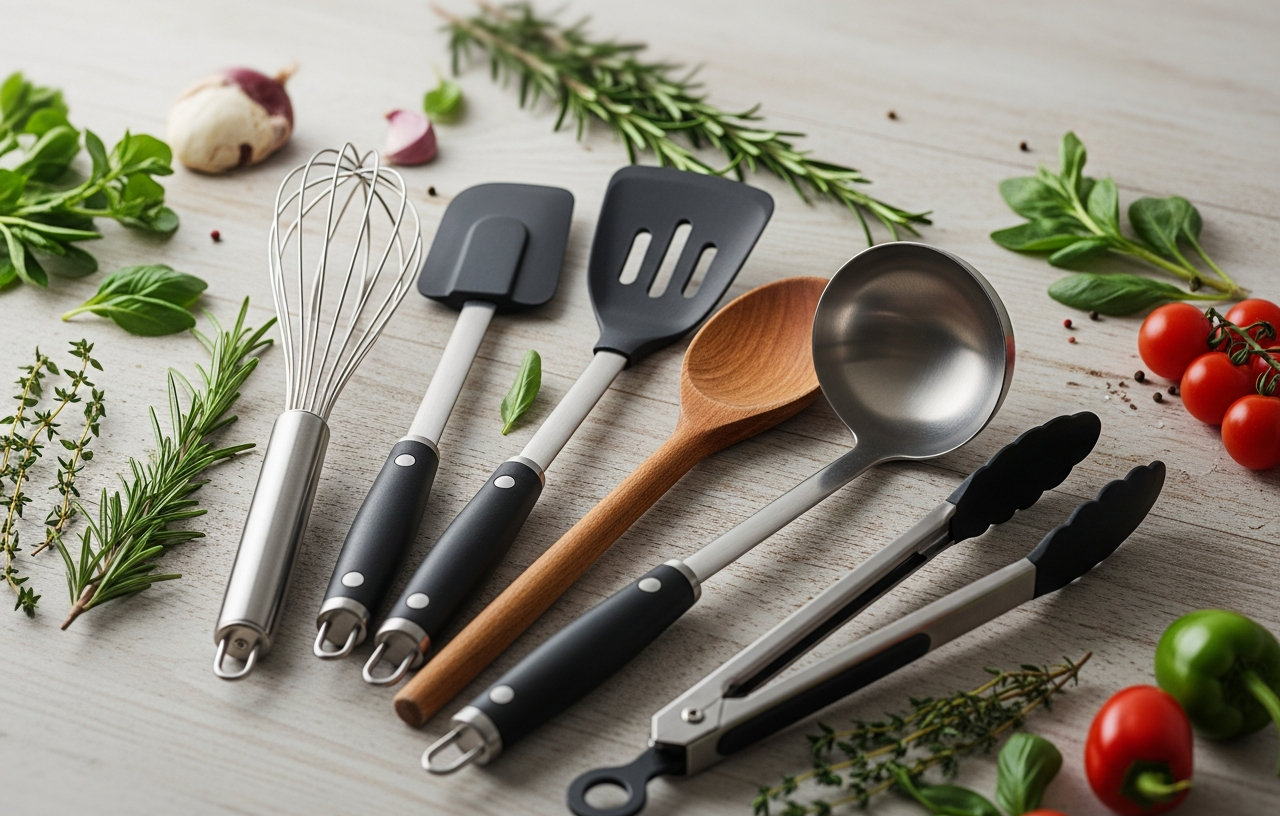
Common items in these sets include a slotted turner, a serving spoon, a ladle, a whisk, and sometimes a spatula or tongs. While functional for everyday cooking, these tools may not withstand heavy use or high temperatures as well as more expensive options. For example, plastic handles can melt if left resting on hot pan edges, and thinner stainless steel might bend over time. The lifespan of these sets is generally shorter, requiring replacement sooner.
Mid-Range Utensil Sets: $40 to $80
Moving into the $40 to $80 range, you will find sets with improved material quality and a broader selection of tools. These sets usually contain 10 to 15 pieces. They often feature heat-resistant silicone, more robust stainless steel, or solid wood components. Handles are typically ergonomic and made from durable materials like silicone-wrapped stainless steel or high quality plastic.
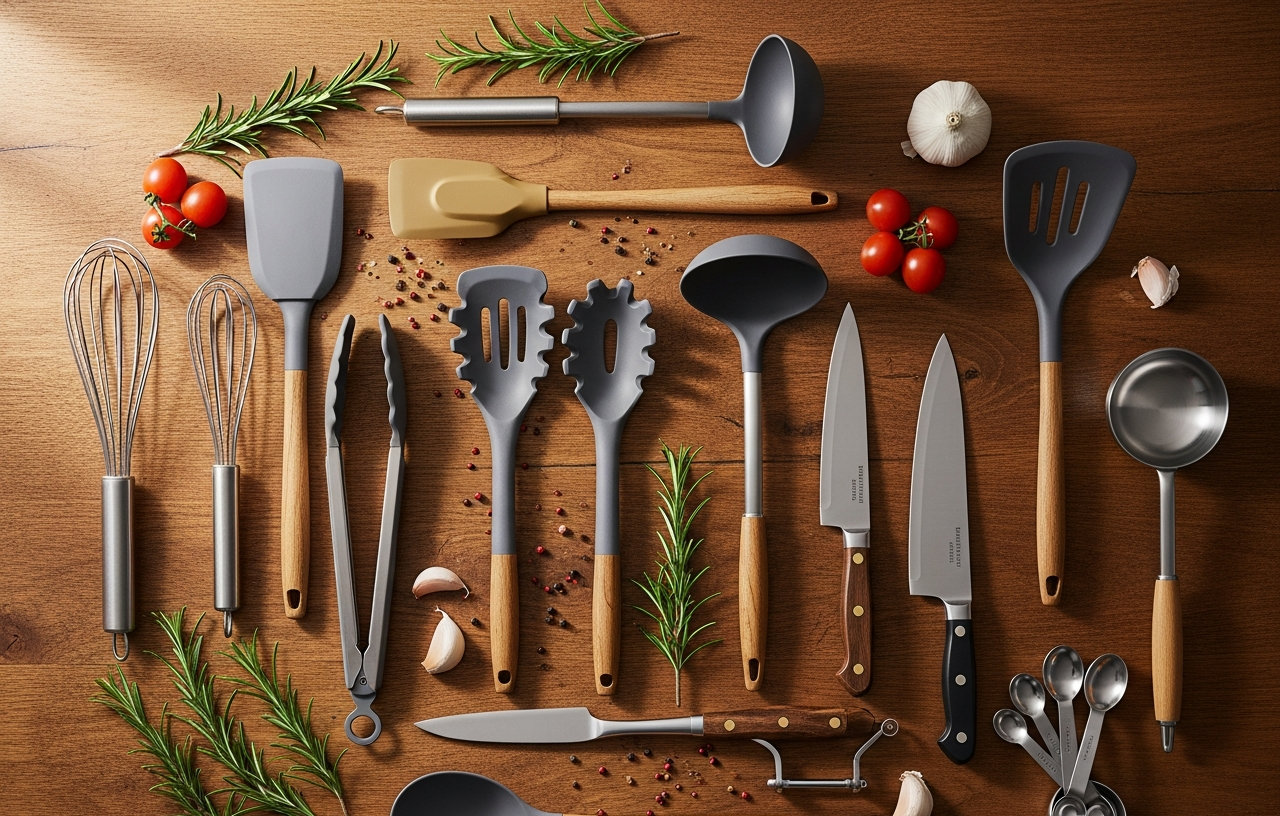
A mid-range set might include a pasta server, a potato masher, a skimmer, and a can opener, in addition to the basic items. The silicone heads on these utensils are often rated for higher temperatures, making them safer for use with hot pans. The stainless steel pieces are thicker and less prone to bending. These sets offer a good balance of cost and durability, suitable for regular home cooking.
Premium Utensil Sets: $80 to $200+
At the higher end, sets costing $80 to $200 or more offer superior craftsmanship, high-grade materials, and extensive collections. These sets often include 15 to 25+ pieces and sometimes come with a stylish holder or crock for countertop storage. Materials are typically food-grade silicone (BPA-free and heat-resistant up to 450-500°F), heavy-gauge stainless steel, or high quality hardwoods like acacia or beech.
Beyond the standard tools, premium sets often include specialized items such as a basting brush, a pizza cutter, a cheese grater, a peeler, or specialized spatulas. Some even feature measuring spoons and cups. These sets are built for longevity, heavy daily use, and often come with extended warranties. The aesthetic appeal is also a factor, as premium sets frequently boast sleek designs and polished finishes that complement modern kitchens.
Factors Influencing Utensil Set Costs
Several key factors drive the price differences across kitchen utensil sets. Understanding these can help you evaluate whether a particular set offers good value for its cost.
Material Quality and Type
The primary determinant of cost is the material. Different materials offer varying levels of durability, heat resistance, and non-scratch properties.
- Nylon and Plastic: The least expensive, often found in budget sets. They are lightweight and safe for nonstick cookware, but have lower heat resistance (typically up to 400°F) and can stain or melt if exposed to prolonged high heat.
- Silicone: A popular choice for its heat resistance (often up to 450-500°F) and non-scratch properties, making it ideal for all cookware types, including nonstick pans. Prices vary based on the grade of silicone and whether it's solid or has a metal core.
- Stainless Steel: Durable, rust-resistant, and aesthetically pleasing. Higher-grade stainless steel (e.g., 18/8 or 18/10) costs more but offers better corrosion resistance and strength. Stainless steel utensils are excellent for stainless steel cookware but can scratch nonstick surfaces.
- Wood and Bamboo: Environmentally friendly and gentle on all cookware surfaces. Price depends on the type of wood and craftsmanship. Hardwoods like acacia or olive wood are more expensive and durable than bamboo. They require hand washing and occasional oiling.
- Combination Materials: Many modern sets combine materials, such as silicone heads with stainless steel handles, to get the best of both worlds. This often increases the cost compared to single-material sets.
Number of Pieces
Logically, a set with more pieces will cost more. A 5-piece starter set will be significantly cheaper than a 25-piece mega-set. Consider how many unique tools you truly need. Some larger sets include items that many home cooks rarely use, such as specialized garnishing tools or multiple sizes of the same utensil.
The average home cook typically needs about 8-12 core utensils. A set that includes essential items like a spatula, ladle, slotted spoon, tongs, whisk, and perhaps a pasta server, will suffice for most daily tasks.
Brand Reputation and Warranty
Established brands known for quality cookware and kitchen tools often charge more for their utensil sets. Brands like OXO, KitchenAid, Cuisinart, and All-Clad have reputations built on durability, design, and customer service. These brands often use higher-quality materials, employ better manufacturing processes, and may offer longer warranties, justifying a higher price point.
Lesser-known or generic brands available on online marketplaces might offer seemingly similar sets at lower prices. However, the quality of materials, ergonomic design, and overall durability might be compromised. Always check verified customer ratings and reviews to assess the real-world performance of these brands.
Included Accessories and Storage
Some utensil sets include a countertop holder, a rotating stand, or a drawer organizer. These additions can increase the overall cost, typically by $10 to $30. While they add convenience and keep your kitchen organized, they are not always essential. If you already have storage solutions, you might save money by choosing a set without these extras.
Special features, such as heat-resistant handles, dishwasher-safe designs, or particularly ergonomic grips, also contribute to the price. Sets with reinforced cores in silicone utensils or precision-balanced stainless steel tools will generally cost more.
When to Buy a Set vs. Individual Utensils
Deciding whether to purchase a complete utensil set or individual pieces depends on your current kitchen needs, existing tools, and budget. There are clear financial and practical advantages to both approaches.
Buying a Complete Set: cost effective for Beginners
Purchasing a complete kitchen utensil set is almost always more cost effective per item than buying each piece individually. For someone outfitting a new kitchen, a beginner cook, or a college student, a set provides all the basic necessities in one go, often at a significant discount compared to piecing together the same collection.
For example, a 10-piece set might cost $50, making each utensil $5. Buying 10 individual, comparable quality utensils could easily cost $8-$15 each, totaling $80-$150. Sets remove the guesswork and ensure you have a cohesive collection of tools for common cooking tasks.
A good starting point for a new kitchen would be a mid-range set, perhaps 10-12 pieces, priced around $40-$70. This provides a solid foundation without overspending. Many best kitchen utensil sets offer excellent value in this range.
Buying Individual Utensils: For Specific Needs and Upgrades
Buying individual utensils makes financial sense when you already have a functional collection but need to replace a single worn-out tool, upgrade a specific item, or acquire a specialized utensil not typically found in standard sets.
Consider a scenario where your existing silicone spatula has melted, but the rest of your tools are fine. Replacing just the spatula with a high quality, heat-resistant one for $10-$20 is far more economical than buying a whole new set. Similarly, if you frequently make pasta and want a premium pasta server that wasn't in your original set, buying it individually allows you to invest in that one specific tool without buying redundant items.
This approach also lets you customize your collection, choosing the absolute best material and design for each specific task. You might prefer a wooden spoon for stirring sauces, a stainless steel whisk for beating eggs, and a silicone spatula for flipping pancakes. This tailored approach can result in a higher overall quality collection, even if the per-item cost is greater.
long term Value and Replacement Costs
When considering the cost of a kitchen utensil set, think beyond the initial purchase price. The long term value is tied to durability and how often you will need to replace items.
A $20 budget set might seem attractive, but if the nylon tools melt after six months of use or the plastic handles crack, you will incur replacement costs sooner. Two budget sets over two years could equal the cost of one mid-range set that lasts five years.
Investing in a mid-range or premium set, especially those with high quality silicone or stainless steel, often pays off in the long run. These materials withstand higher temperatures, resist staining, and are generally more robust. Many premium brands offer lifetime warranties on their products, reducing future replacement costs to zero.
Check the manufacturer's care instructions. Dishwasher-safe utensils save time and effort. Wooden utensils require hand washing and occasional oiling to prevent drying and cracking. Stainless steel and high-grade silicone are generally very low maintenance.
Getting the Most Value for Your Money
To ensure you get a good return on your investment in a kitchen utensil set, consider these points:
- Assess Your Needs: List the specific utensils you use most frequently. If a set includes many items you won't use, a smaller, higher-quality set or individual purchases might be better.
- Material Match: Match utensil materials to your cookware. Silicone and wood are safe for all surfaces, including nonstick. Stainless steel is best for stainless steel or cast iron.
- Read Reviews: Look for verified customer reviews focusing on durability, heat resistance, and comfort of use. Pay attention to common complaints about melting, breaking, or staining.
- Consider Versatility: Some utensils are multi-purpose. A sturdy pair of tongs can serve many functions. A good spatula can flip, stir, and scrape.
The cost of a kitchen utensil set reflects its materials, craftsmanship, and the number of tools included. By understanding these factors, you can choose a set that fits your budget and cooking style, providing reliable service for years to come.