Is It Safe to Use Chipped Enameled Cast Iron?
The location of the chip determines the safety of your cookware. A chip on the outside of a Dutch oven is a cosmetic issue. A chip on the inside cooking surface is a safety hazard. You must stop using the pot for cooking immediately.
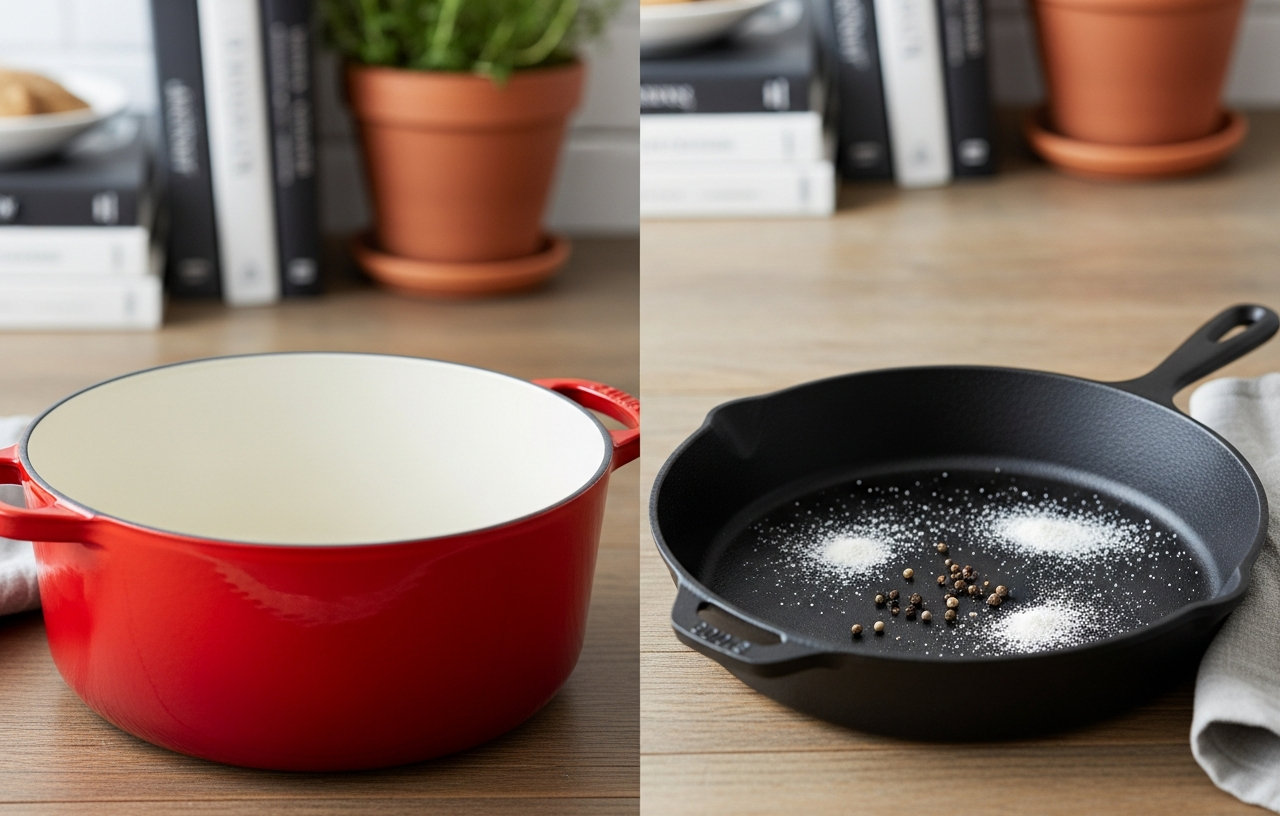
Enameled cookware is a cast iron base covered in a layer of vitreous enamel, which is a type of glass. This glass coating is fused to the iron at temperatures over 1400°F. When this surface chips, it exposes the raw cast iron underneath and creates a sharp, unstable edge on the enamel layer.
Chips on the Cooking Surface (Interior)
A chip on the inside is a serious problem. The primary danger is that the compromised area can continue to flake off small, sharp shards of enamel into your food. These glass fragments are not something you want to ingest. The edges of the chip are weak points, and the stress of heating, cooling, and stirring can cause more of the coating to break away.
Additionally, the exposed cast iron will rust. This rust can flake into your food, imparting a metallic taste and discoloration. While a small amount of rust is not harmful, it is not ideal for cooking. The porous nature of the exposed iron can also harbor bacteria if not cleaned and dried with extreme care.
Because of these risks, any enameled cast iron pot, pan, or skillet with a chip on the interior cooking surface should be retired from cooking duties.
Chips on the Exterior or Rim
Chips on the outside of the pot are a different story. These are typically cosmetic flaws that do not affect the pot's performance or safety. The cooking surface remains intact and sealed. You can continue to use a pot with exterior chips without worry. The exposed iron on the outside might develop surface rust, which you can clean off and dry to prevent its spread.
A chip on the rim is a middle ground. It may not directly touch your food, but the friction from putting on and taking off the heavy lid can worsen the chip over time. This can cause more enamel to flake off, potentially falling into the pot. Inspect rim chips carefully and monitor them for any signs of worsening damage.
How to Repair Chipped Enamel Cast Iron: A Reality Check
Searching for how to repair chipped enamel cast iron leads to many products marketed as repair kits. However, a true, food-safe repair at home is not possible. The industrial process of applying enamel cannot be replicated in a home kitchen. The available kits are for cosmetic touch-ups on non-cooking surfaces only.
Most enamel repair kits consist of a high-temperature epoxy or porcelain touch-up paint. These products are designed for the exterior of appliances like stoves, grills, or washing machines. They are not formulated to be food-safe. When heated to cooking temperatures, they can release chemicals that should not be consumed.
Never use an enamel repair kit on the inside of any cookware.
Using a Repair Kit for Exterior Chips
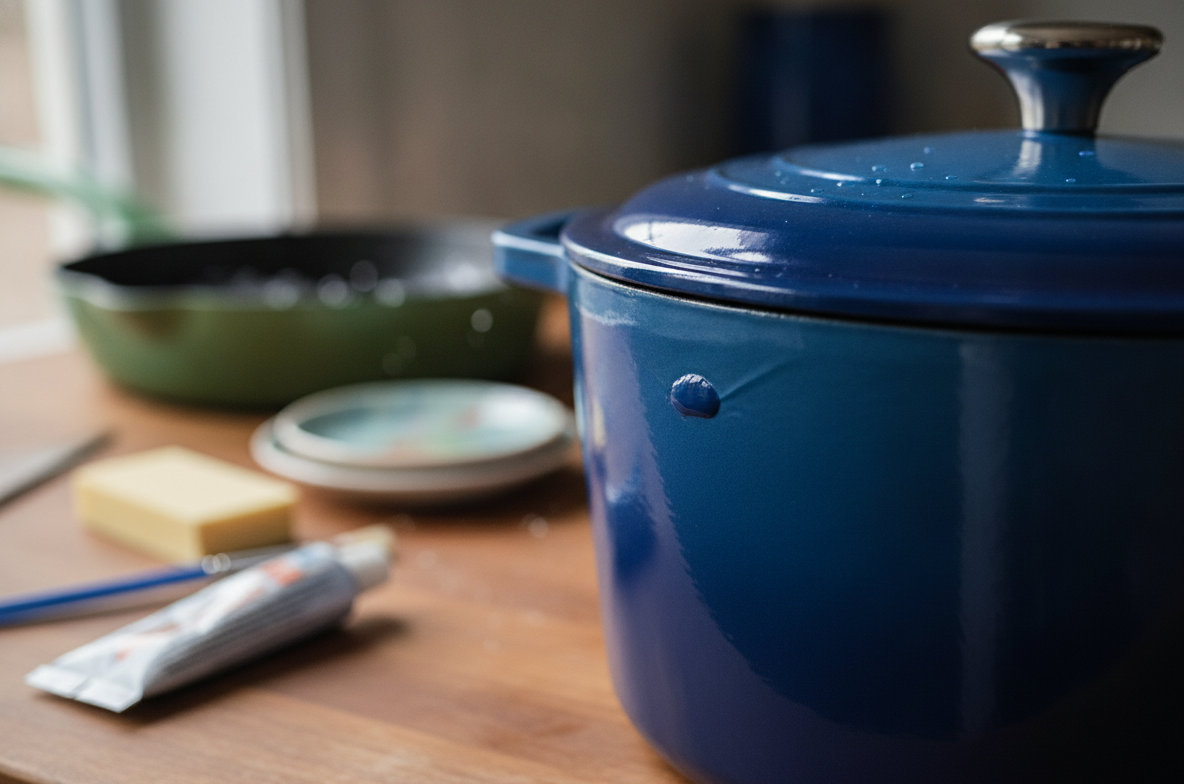
If you have a cosmetic chip on the outside of your pot and want to fix its appearance or prevent rust, you can use a high-heat enamel repair kit. This is a purely aesthetic fix. The cost for these kits is typically between $15 and $30.
- Clean the Area: Wash and thoroughly dry the chipped area. Use a small amount of rubbing alcohol on a cloth to remove any grease or residue.
- Smooth the Edges: If the chip has rough edges, you can very gently sand them with fine-grit sandpaper. The goal is to remove any loose flakes, not to abrade the surrounding enamel. Wipe away any dust.
- Apply the Repair Product: Apply a thin, even layer of the repair liquid or paste using the small brush provided. Follow the product's specific application instructions.
- Cure Completely: Let the repair cure for the full time recommended by the manufacturer, which could be 24 hours or longer. Do not use or wash the pot during this time.
This process will seal the exposed iron from air and moisture, preventing rust and improving the look of your cookware. It does nothing to restore the original strength of the enamel.
Assessing the Damage: Repair, Repurpose, or Replace?
Once you find a chip, you need to decide what to do with your cookware. The decision tree is simple and prioritizes safety above all else.
When to Stop Using It for Cooking
You must retire your enameled cast iron from cooking duties if you observe any of the following:
- Interior Chips: Any chip, no matter how small, on the cooking surface.
- Cracks: A crack in the enamel that exposes the iron underneath. Hairline cracks, also known as crazing, can also be a problem as they can trap food and bacteria.
- Structural Damage: A deep crack that appears to go through the cast iron body itself. This is rare but can happen if a pot is dropped.
How to Repurpose a Chipped Dutch Oven
Just because it's no longer food-safe doesn't mean your beautiful pot is useless. A heavy, attractive Dutch oven can find a new life in your home.
- A Stylish Planter: They make excellent, sturdy planters for indoor herbs, succulents, or flowers. Just be mindful of drainage.
- Kitchen Utensil Holder: A small- to medium-sized pot is perfect for holding spatulas, spoons, and whisks on the countertop.
- Fruit Bowl: It can serve as a beautiful, rustic fruit bowl.
- Bread Proofing Bowl: If the interior chip is small and contained, you can still use it to proof bread dough with a liner like parchment paper or a floured towel.
- Decorative Storage: Use it to hold anything from potatoes and onions in the pantry to mail on a console table.
- Ice Bucket: Fill it with ice to chill wine or other beverages during a party. The cast iron's mass will help keep the ice cold for longer.
What About Manufacturer Warranties?
Before you decide to repurpose or discard your cookware, check the manufacturer's warranty. Premium brands, especially Le Creuset and Staub, often come with a limited lifetime warranty. This warranty is a significant part of their higher price tag.
However, these warranties have specific limitations. They typically cover defects in materials and workmanship, not damage from misuse.
What a warranty usually covers:
- Bubbling, peeling, or cracking that occurs during normal use.
- Pitting or unevenness in the enamel that was present from the factory.
- Flaws that are clearly a result of the manufacturing process.
What a warranty does not cover:
- Impact Damage: Chips caused by dropping the pot or hitting it with a hard object.
- Thermal Shock: Damage from plunging a hot pot into cold water or vice-versa.
- Improper Utensil Use: Scratches and chips from using metal utensils.
- Overheating: Damage to the enamel from heating an empty pot or using excessively high heat.
- Improper Cleaning: Damage from abrasive cleaners or steel wool.
It is always worth contacting the manufacturer. Take clear photos of the damage and explain how it happened. The company will make the final determination. In some cases, even if the damage is not covered by the warranty, a company might offer a discount on a replacement piece as a gesture of goodwill.
Understanding the nuances of these warranties can be helpful when choosing a new piece. For more details, see our comparison of these two popular brands. Staub vs Le Creuset: Which Dutch Oven Should You Buy?
Preventing Future Chips in Your Enameled Cookware
The best way to deal with chips is to prevent them from happening in the first place. Enameled cast iron is durable, but it is not indestructible. Treating it with care will extend its life significantly.
Avoid Sudden Temperature Changes
Thermal shock is a primary enemy of enamel. Never place a hot pot on a cold surface or run it under cold water. Let your cookware cool down for at least 15 to 20 minutes before washing. Likewise, always preheat your pot over low to medium heat for a few minutes before turning the temperature higher. Never heat an empty pot.
Use the Right Utensils
Metal utensils can scratch, scrape, and eventually chip the enamel surface. Stick to wood, silicone, or nylon tools for stirring, scraping, and serving. This simple habit is one of the most effective ways to protect your investment.
Clean with Care
For daily cleaning, warm water, dish soap, and a non-abrasive sponge are all you need. Avoid steel wool, harsh scouring pads, and abrasive cleaners like Comet. For stubborn, stuck-on food, fill the pot with warm, soapy water and let it soak. You can also simmer a mixture of water and a few tablespoons of baking soda for 10-15 minutes to loosen food residue.
Store It Properly
Impact chips often happen during storage. Avoid stacking other heavy pots and pans inside your enameled Dutch oven. If you must nest them, place a protective barrier between the pieces, such as a pot protector, a soft dish towel, or a few layers of paper towels. When storing the pot with its lid, place the lid on upside down with a towel in between, or leave it slightly ajar, to prevent chipping the delicate rim.
While interior chips effectively end the cooking life of an enameled cast iron pot, the piece itself can still be useful. By understanding the causes of damage and practicing careful prevention, you can keep your cookware in excellent condition for years. When it is time for a replacement, knowing the differences between cookware types is a great first step.
For more information on cookware materials, you can read our detailed guide. Enameled vs. Raw Cast Iron: Choosing the Right Cookware